

Description
Beckett, Samuel (1906 – 1989)
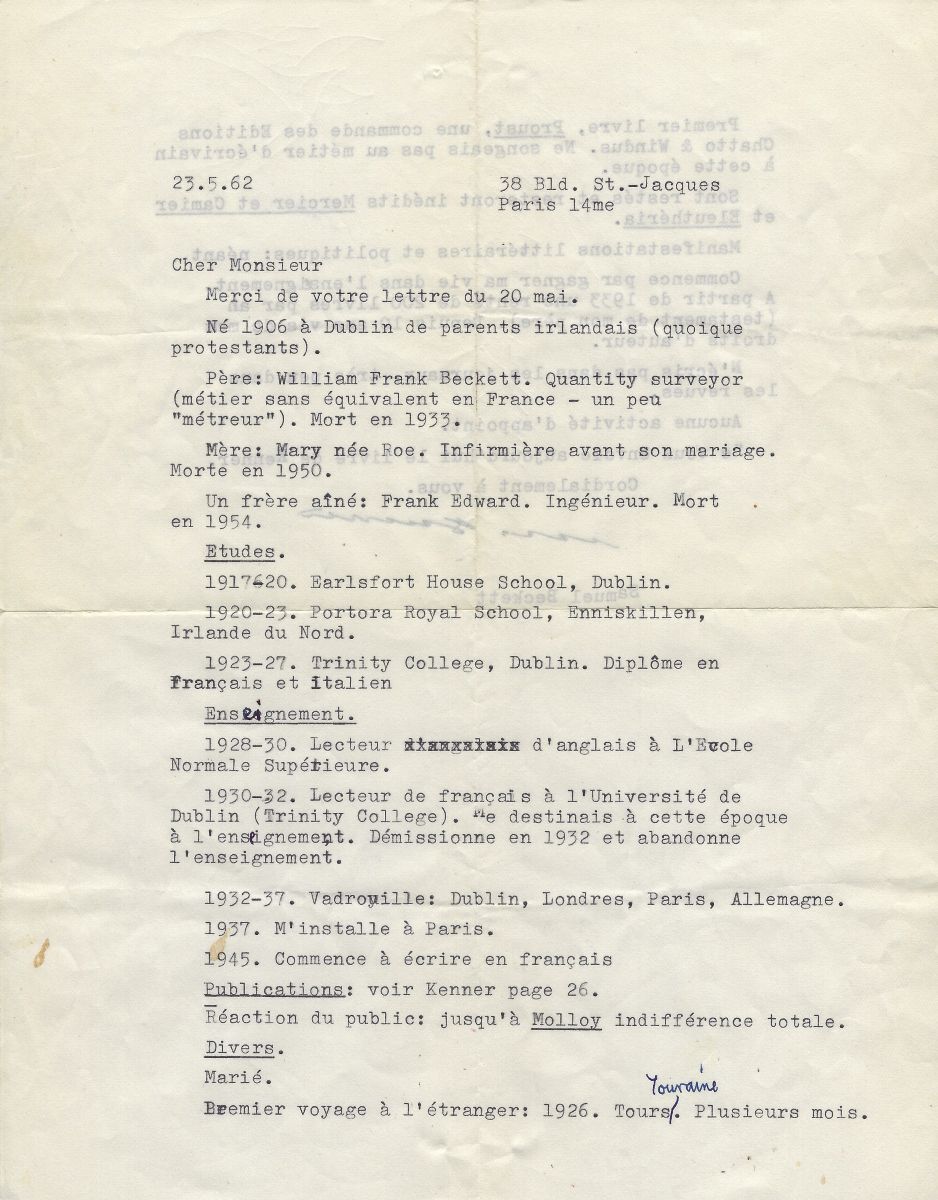
‘Public reaction: up until Molloy complete indifference’
An interesting typed letter signed by Samuel Beckett (‘Samuel Beckett’), 23rd May 1962, in French. He thanks his correspondent for his letter, and offers some biographical details, starting with, ‘Born 1906 in Dublin to Irish parents (though protestants). Father: William Frank Beckett. Quantity surveyor… Died in 1933. Mother: Mary nee Roe. Nurse before her marriage. Died in 1950. An elder brother: Frank Edward. Engineer. Died in 1954.’ He goes on to list his studies: Earlsfort House School, Dublin (1917 – 1920), Portora Royal School (1920 – 1923) and Trinity College (1923 – 1927). Beckett then moves on to his teaching jobs in England, Ireland, France and Germany from 1920 and through the 1930s. He then notes, ‘1945: start writing in French.’
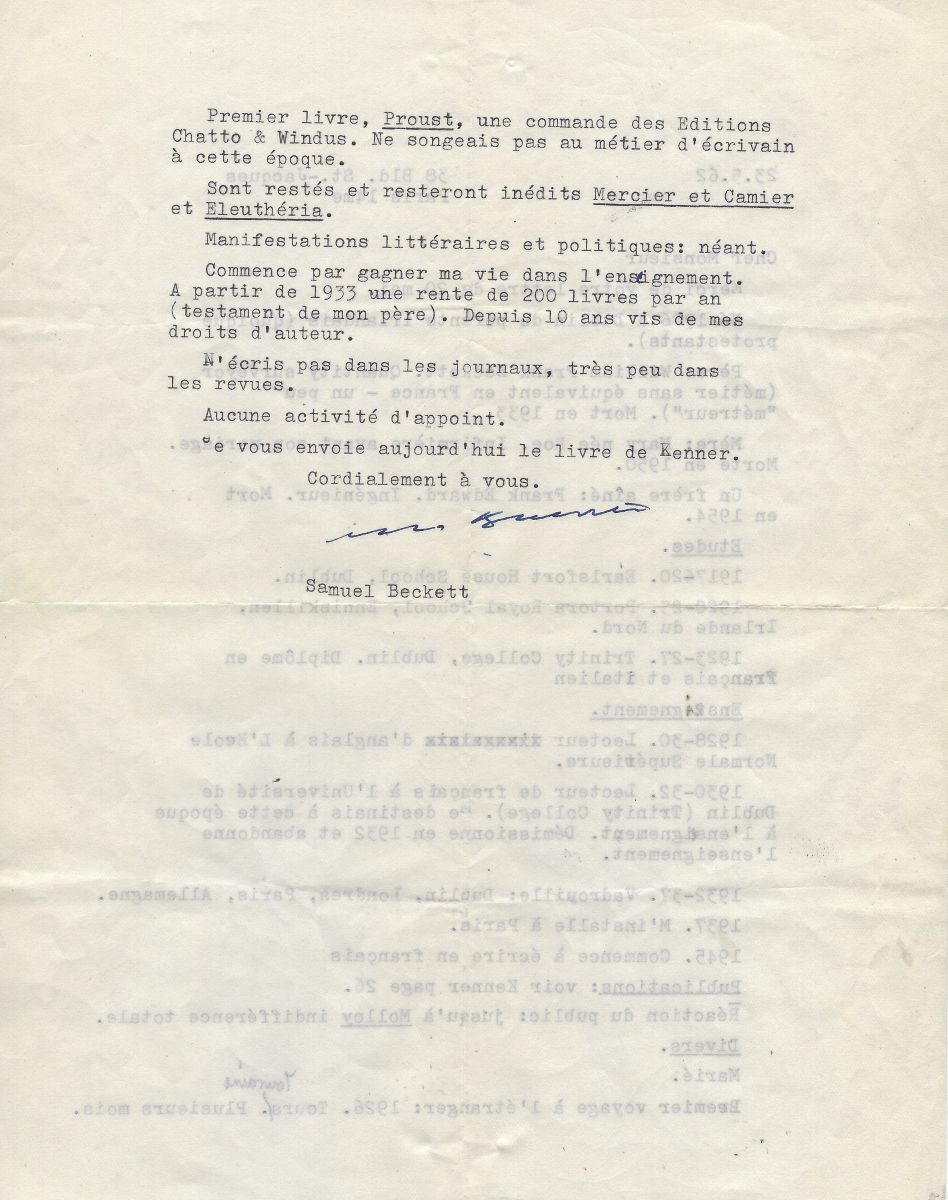
Moving on to his publications, Beckett writes, ‘see Kenner page 26’ [referring to Hugh Kenner’s 1961 Samuel Beckett: A Critical Study], then notes, ‘Public reaction: up until Molloy complete indifference.’ Moving onto more general matters, he describes himself as married, the notes that his first trip abroad was in 1926: ‘Tours. Many months.’ He then writes, ‘First book, Proust, commissioned by Editions Chatto & Windus. I wasn’t thinking about becoming a writer by profession during this period. Mercier et Camier and Eleutheria have remained, and will remain, unpublished. Literary and political activities: none. I started by earning a living in teaching. From 1933 I received an annuity of 200 pounds per year (as per my father’s will). I have been living off my copyrights for the past 10 years. Don’t write for newspapers, very little in reviews. No side activities.’ Beckett closes by saying, ‘I am today sending you the Kenner book. Best to you, Samuel Beckett’.
Letter folds, otherwise in very fine condition. Together with original transmittal envelope. A curt, informative early letter by the author. Mercier et Camier was eventually published in 1970. Eleutheria was not published until after Beckett’s death.